


What makes impressionist images great?
Have you ever admired a photograph but weren’t sure why? How do you produce impressionist images that will fulfill your aspirations as well as catching and holding the viewer’s attention? How does one make everyday, ordinary subjects more interesting?
There are several possible answers to these questions.
We usually talk about a photograph’s design, content, or overall composition, but that’s often not what really stirs us. Choosing to interpret rather than just record a subject is a main goal of impressionist photography.
An impressionist image can tell a story, convey a feeling, and capture a mood.
There are many aspects of the creative process that can change the appearance of a subject to suit your artistic vision, in addition to the photographic techniques. When you choose to push beyond a technique, the real power of impressionist photography begins to emerge.
This requires a willingness to try new approaches. When this is successful it gives you extensive choices for further refining the results, and the viewer will be able to see the subject in a new and interesting way.
We all strive to produce images that are appealing, fascinating or even emotionally moving. When an image evokes my deep feelings, I can’t take my eyes off it. I love feeling moved viewing another artist’s work. Equally I hope to touch someone’s emotions through my own photographs.
What enables you to discover how to evoke viewers’ feelings and make them connect with your images? I think capturing your feelings and emotions is a key to creating unique and compelling impressionist photographs.
The greatest compliment viewers can give you, as an artist, is that they see you in your work, and that you have put your heart and soul into a photograph. Think about what moves you. Is it a sunrise over the ocean? A lighthouse? The first flowers of spring? Whatever it is, use it as your subject. Explore your feelings, deep inside, and use what you discover to create your images.
If you photograph with feelings, and photograph your emotions, you will not only be inspired, but also inspire others.
The most important aspect of capturing impressionist photographs is the way in which you as an artist observe your subject. Every element of a composition ̶ light, colour, texture and design must be very carefully considered, as the relative emphasis you give to each element determines the overall mood and impact of the image. By considering the effect of various interpretations of a subject and becoming more aware of the possibilities available, we can learn to look at the subject from different perspectives and consequently be more experimental in our photoshoots.
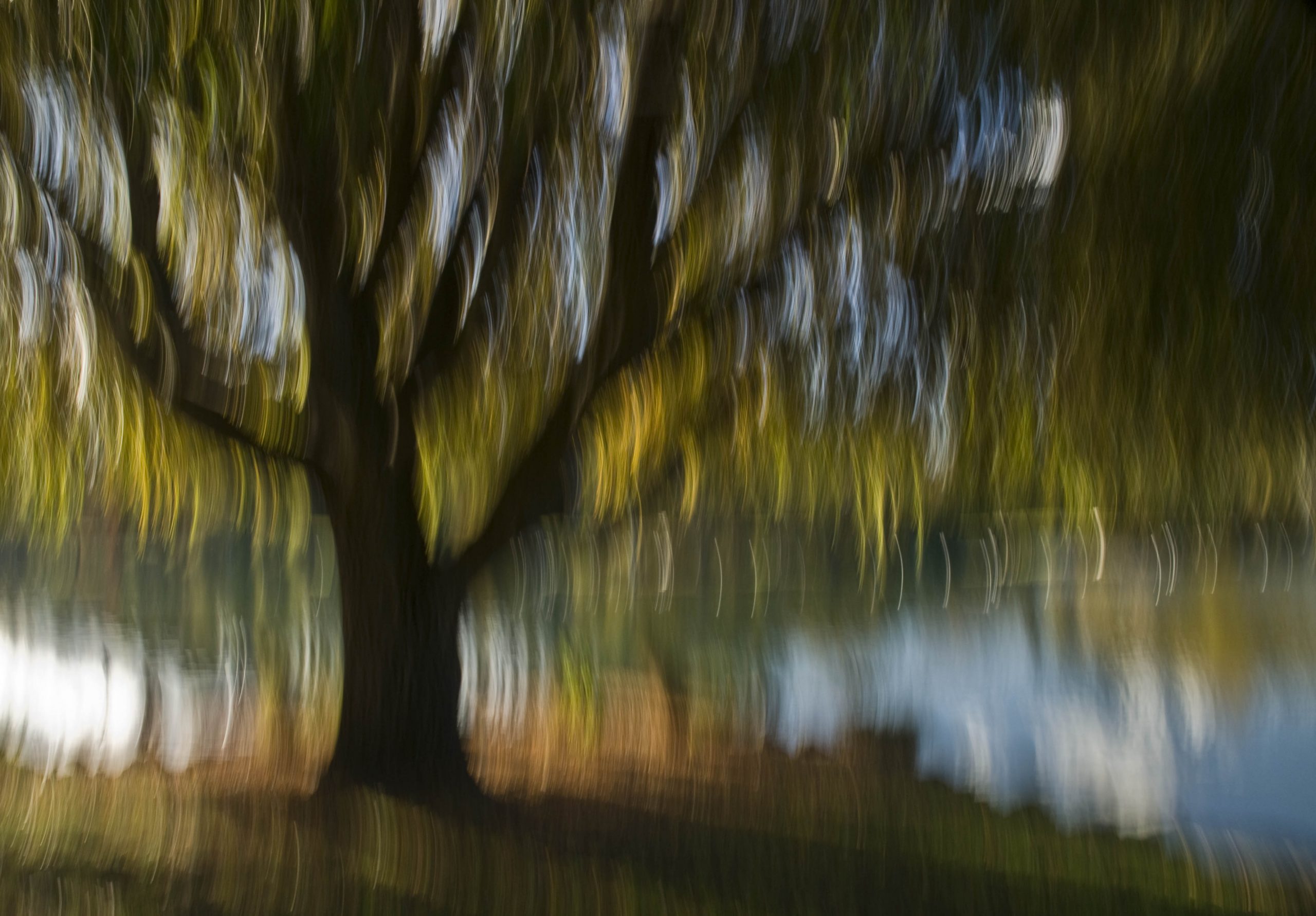
Ordinary subjects can become interesting images. Open your mind to the visual elements of a scene. Instead of looking at a scene for what it is, try ‘seeing’ the underlying elements that caught your attention in the first place. For example vibrant colours, like red or bright yellow, in a sunset may excite us. Fresh spring-like pastels may cheer us. Dark sombre colours may help express sadness. Light and the quality of light are also very crucial in establishing mood, ambience and drama in an image. They give you a range of options to carry out your own personal interpretation of a subject or scene.
I prefer images that are straightforward and uncluttered. I always find myself searching for strong graphic elements that I can focus on within a scene. Too many elements within the picture frame confuse the viewer and dilute the overall impact of the image. I look for alements that constitute the essential character and mood of my subject or scene.
The wonderful thing about creativity is that it is coming from a view of life that’s constantly changing. How we see an image today is not necessarily the way we will envision it tomorrow and, most definitely, that’s not the way we will look at it weeks or months later.
We are always trying to improve everything we do. Time and knowledge will change your outlook, not only in photographs you will create, but in images you’ve already captured. When faced with a particular subject I always ask myself, how can I improve on this? Is there anything I can do differently to make it stronger? I can try different compositions, changing my point of view, coming in close, returning to the same spot at different times of the year and in different light and weather conditions. A small change can make a huge difference.
Sometimes these possibilities or ideas develop during the photoshoot, one idea prompting another. On other occasions, an idea might develop over a period of time, experimentally and with a succession of failures.
While we are all different in what excites or moves us, we’ll want to create based on the deep feelings that make us who we are. If you can express the very core of your being in an image, you can’t ask for more.


About Post Author

Hi Eva
That was a great explanation to my question and wondering. I will try to see how I can convey the world with those eyes. I am very intrigued although I know norhing of the genre.
All the best and thanks for continuously inspiring.
Beth ♥️