


Telling Stories Through Images: Why Your Intention Matters
One of the most common questions I’m asked is: “How do you tell a story with your images—especially in impressionist photography, where things are softer, more abstract, and more interpretive?”
And the answer is simpler than most people expect.
Storytelling in photography doesn’t begin with the viewer. It begins with you—with your intention, your curiosity, your emotional response to the world in front of your lens.
Start with Identifying What You Want to Photograph
Before you pick up your camera or choose a technique, pause for a moment and ask yourself:
-
What am I responding to right now?
-
What is attracting me?
-
What do I want to explore?
Your “story” doesn’t need to be profound. It can be incredibly simple:
-
I love the shape of this branch.
-
The light is dancing on the water.
-
This moment feels peaceful.
-
I want to capture the movement of the wind.
When you identify what you want to photograph first, everything else falls into place. Your choice of technique—ICM, soft focus, multiple exposures, slow shutter work—becomes much clearer. Your composition begins to form naturally around your intention. Instead of trying to force a narrative, you allow the story to grow organically.
Let the Technique Support Your Story
Every tool we use behind the camera is a form of language. Movement, blur, colour, rhythm, abstraction—these are all visual words. When you know what you want to express, you can choose the right “words” to speak it.
-
Want to convey energy or chaos? ICM with bold movement can say that.
-
Want to express softness or gentleness? A delicate blur or muted palette can whisper it.
-
Want to capture the magic of light? Let your shutter stay open and let the light dance through the frame.
The technique becomes a bridge between your intention and the final image.
Your Story Doesn’t Have to Be Their Story
This is the beauty of impressionist and expressive photography:
Your viewer doesn’t need to know your story to feel something.
Your intention guides the creation of the image, but once the photograph is complete, it belongs to the viewer. They bring their own memories, emotions, and imagination to it. A single image may evoke peace in one person, nostalgia in another, and mystery in someone else.
And that’s not only okay—it’s the magic of this art form.
Your story is like the seed.
The viewer’s story is the flower.
Invite, Don’t Instruct
Images that resonate most deeply are the ones that leave space—space for curiosity, space for emotion, space for interpretation. When you photograph with clear intention but without the need to control what the viewer sees, you create work that feels open, alive, and generous.
Your role is not to dictate the meaning.
Your role is simply to express your response to the world—honestly, gently, creatively.
In the End, Storytelling Is About Presence
The more present you are with what draws your attention—the light, the colour, the movement, the feeling—the more naturally your images will speak. Storytelling becomes effortless when you allow yourself to follow your intuition and let the technique support that inner impulse.
So next time you go out to photograph, try this:
-
Notice what attracts you.
-
Identify why you want to photograph it.
-
Choose a technique that amplifies that intention.
-
Create with openness—and trust that your viewer will bring their own story.
Because the best stories told through images are the ones that start with your intention… and end in someone else’s imagination.
The Story Within the Image
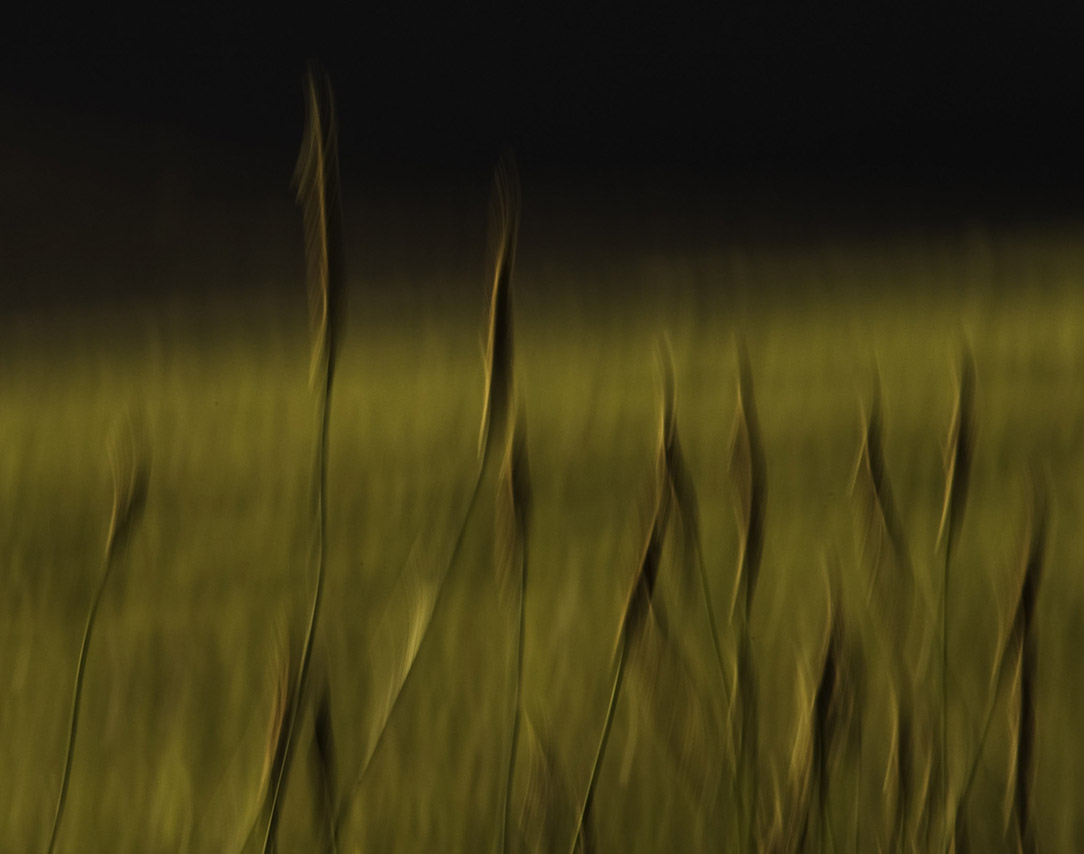
This photograph tells the quiet story of a moment suspended between light and shadow. The blurred, gently swaying forms of tall grasses suggest a soft breeze moving through a field—an unseen force shaping the scene with rhythm and grace. The warm, muted light gives the grasses a golden glow, while the deep darkness above creates a sense of calm, protection, or the approaching end of day.
It is a story about stillness within motion, and simplicity imbued with emotion.
Nothing dramatic happens here; instead, the narrative lies in the subtlety:
-
the gentle rise and fall of the grasses
-
the fading light brushing their tips
-
the quiet transition from day into dusk
-
the feeling of watching nature breathe
It invites the viewer to slow down and listen to the softness—perhaps recalling their own memories of warm evenings, quiet fields, or moments when the world felt hushed and gentle.
The story is not fixed.
For some, it may be nostalgia.
For others, serenity.
For others still, a feeling of something about to begin or quietly ending.
The image whispers rather than speaks, offering space for the viewer to bring their own emotion into the scene.


About Post Author
