


Express Yourself with Impressionist Photography
For me, there is no greater thrill than discovering a really exciting, inspirational subject ─ and being able to capture my thoughts and feelings about it in the form of impressionist images.
I photograph almost every day. Photography is something that is a vital part of my life, and the desire to do it remains as strong as ever. The reason I photograph is partly, of course, to fulfil a need, and for my own satisfaction and reward. Equally it is to share what I see and feel with others, especially when this concerns a new aspect of old subject matter or a new discovery.
The most interesting and effective images are those that are subjective and individual, rather than those that follow a prescribed style of an application or a software filter
Impressionist photography is a wonderful form of self-expression, but to photograph well you have to be true to yourself. Each photographer has a different view of the world and this should be reflected in the way you capture your images. Always try to infuse your work with personal observation and insight concerning the subject matter, combined with aspects that reveal something about you. The most interesting and effective images are those that are subjective and individual, rather than those that follow a prescribed style of an application or a software filter ─ and could have been made by anyone.
There are various factors that shape our philosophy and techniques used in photography and, naturally, one of the most influential of these is our personality. For example, a cautious person is likely to be careful and precise in approach and most likely will use computer editing software, whereas a more extrovert character will probably work in a freer and more expressive ways of in-camera techniques.
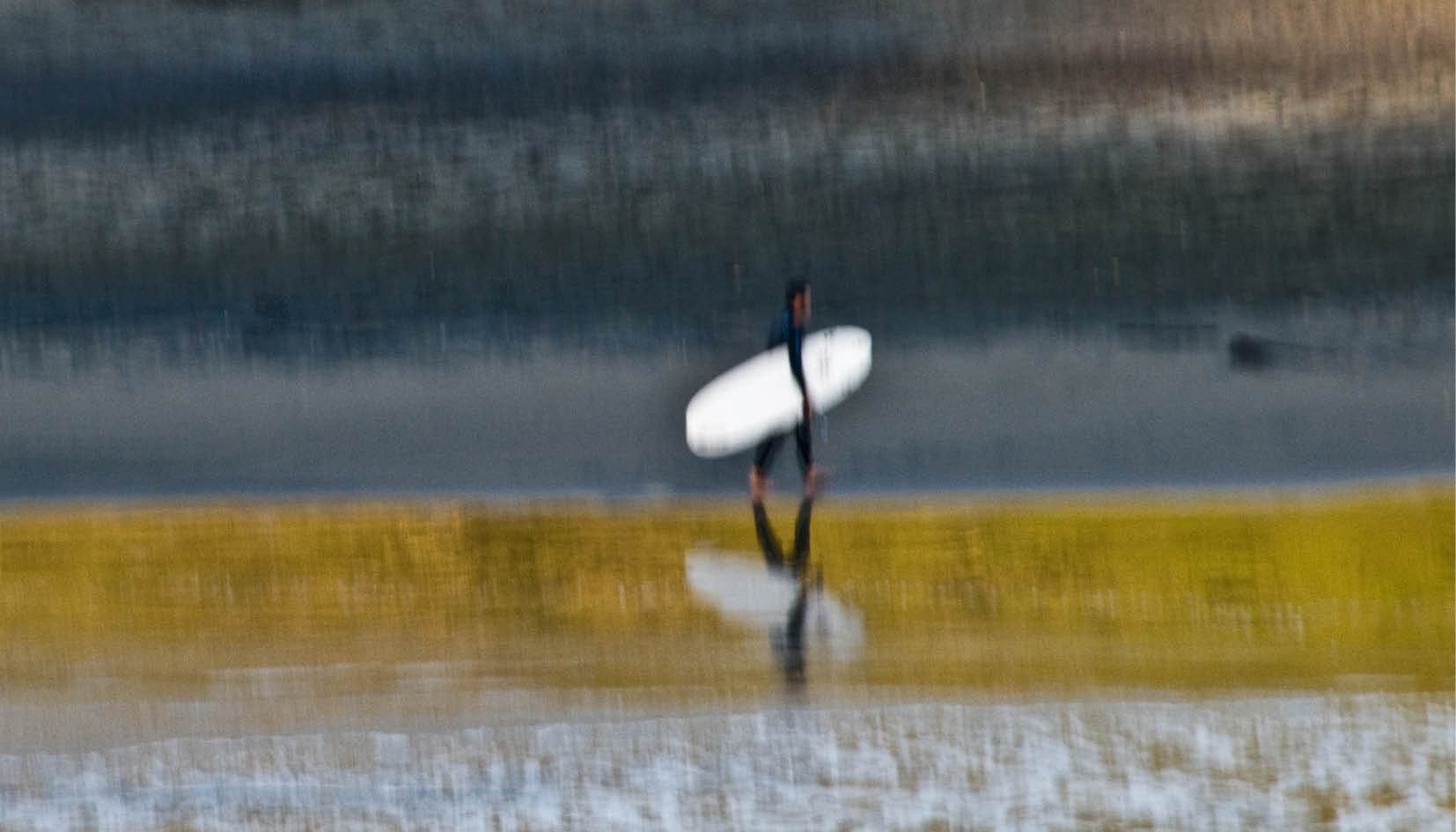
It is worth mentioning at this point that impressionist photography is not just about technique; it is equally a way of seeing and interpreting. Your images should always show a personal response, both with regard to the chosen subject or idea and the means by which this is expressed.
The ability to observe, understand and concentrate on the essentials of a subject is a vital skill. The impact of a photograph will rely just as much on technical competency, as it does on keen observation and interesting content, and all these aspects need constant practice. Impressionist photography is also about communicating ideas, so your aim should be to involve the viewer in the excitement you had for the subject and the qualities that you felt were important.
I think the ideal approach lies in finding a balance between relying on inspiration and being analytical about what you see and feel.
For me, self-expression starts with observation. The initial reaction to a subject is important, because if there isn’t a sense of excitement about what you see, and a strong desire to capture it, then your photographs are unlikely to be a great success. However, before rushing to grab your camera, it is always a good idea to spend some time observing the subject more carefully. I think the ideal approach lies in finding a balance between relying on inspiration and being analytical about what you see and feel. With experience, you will also instinctively recognise that the subject, although initially not inspiring, can be more impressive if you return at another time of day or in different lighting conditions.
The other aspect of expressing yourself through photography is creating the right compositions. However well something is captured, poor composition will spoil the image. When choosing to focus on whatever aspect of the subject matter first attracted you, ensure that the composition as a whole will work in relation to all the elements that you include there. If some kind of adjustment seems necessary to reinforce the impact of the main elements, check that it is not simply a matter of altering the viewpoint. Sometimes just a slight modification to the viewpoint will dramatically improve the composition. In impressionist photography I like simplicity. I look for a composition that has a strong, well- balanced arrangement of shapes and colour. I also like the composition to include something that leads the eye into the image and takes it on a journey to a focal point.

There are plenty of theories about composition, with advice as to what you should and should not do. Such theories are worth consideration of course, but I would encourage you to adopt a more intuitive approach. What seems right in theory doesn’t always succeed in practice and, conversely, with experience, something about composition that should theoretically be avoided can be made to work effectively.
In many respects impressionist photography is more challenging as often the result is as much influenced by happy accidents as it is by one’s skill and experience. At the same time, it is exciting that now and again, quite unexpectedly, something happens that is really enlightening and in consequence lifts our work to a new level. It could be something to do with technique, the way that a particular quality of effect in the subject matter is interpreted, or perhaps a different approach in the use of certain tools.
Success breeds confidence and this in turn encourages a more adventurous approach. Of course we can also learn from our mistakes. We all have the occasional failure. Sometimes it is quite obvious what has gone wrong and which technique or process should have been used instead. At other times the mistake itself teaches us something about a particular subject or technique.
To keep moving forward and gaining confidence in impressionist photography, it is essential to work as often as possible. If you are serious about your work and always seeking to improve your skills, then inevitably you will be able to express yourself with ease. Be true to yourself ─ and don’t be afraid to test your abilities to the limits.


About Post Author

I am very happy with your newsletters. They encourage me to keep following my path
Thank you Hettie